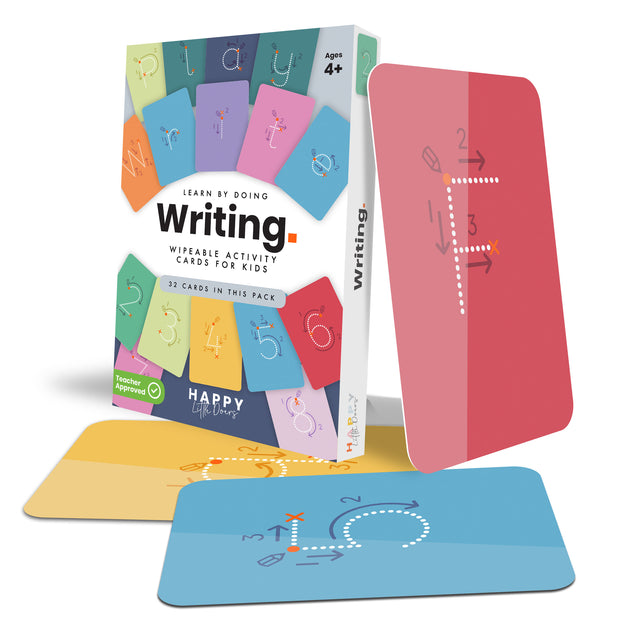


Writing Flashcards
£19.95
FREE SHIPPING ON ORDERS OVER £50

Start typing to see kits, or press Enter to see every match.
Loading…
Parent guide · Writing
The short answer
Writing starts long before letters. Strong fingers come first, then lines and shapes, then letters formed the right way, then their name.
Let them trace with a finger before a pen, and show them where each letter starts. Most children are forming recognisable letters by the end of Reception.

Start here
There's no need to rush to letters. Start with pencil grip and shapes first.
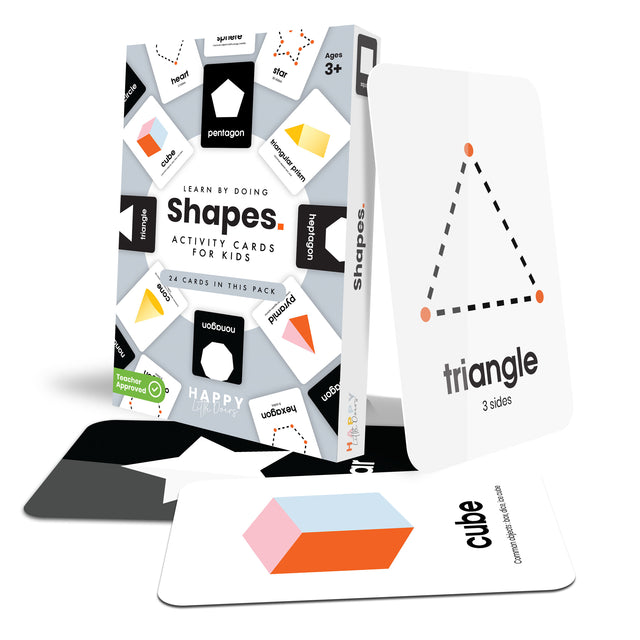
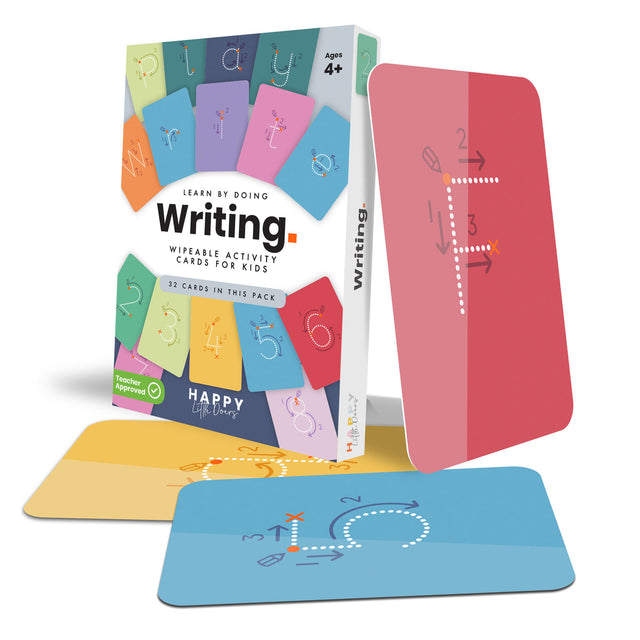
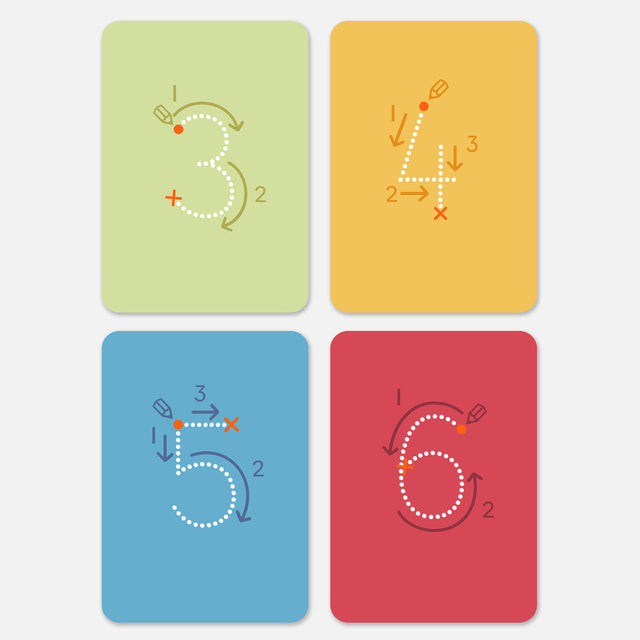
These cards are from our own Shapes and Writing flashcards. Turn them over to see both sides.
Tap a card to turn it over.
A closer look Hover over a card, or tap it, to turn it over.
Every child moves at their own pace, so use this as a rough guide rather than a checklist.
2 to 3 years: Big movements and marks. Straight lines up and down, then side to side, and lots of scribbling.
3 to 4 years: Circles, then crosses. Their grip starts to move from a fist towards fingers and thumb.
4 to 5 years (Reception): Squares, diagonal lines and their name. By the end of Reception, most children can write recognisable letters, with most formed correctly.
Year 1 and Year 2: Letters formed the right way, with capitals and numbers 0 to 9. In Year 2, children usually start joining their letters.
My daughter is 2 and a half and she loves the cards. There is so much play and learning potential for using them over the next few years.


Learning through play
Lots of writing practice doesn't involve a pencil at all. Which makes it fun!
Playdough, stickers, threading beads and picking up pebbles all build the pinch grip they'll need. When they're ready for letters, let them trace with a finger first, then with a pen.
Show them where each letter starts and which way to go. Habits formed early tend to stick.
Three ways to play (and learn) writing.
There are lots of fun ways to practise writing at home. See all our games and activities
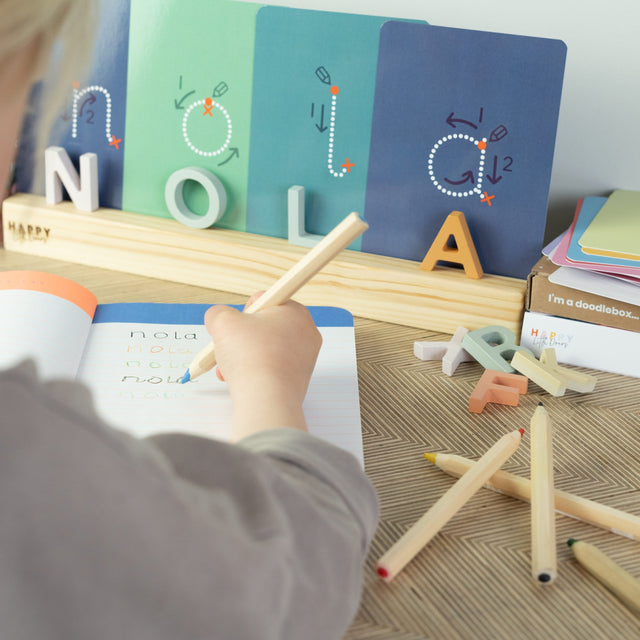
It's often the first word a child really wants to write, so it's a lovely place to start.
The best way to teach handwriting is little and often, starting each letter in the right place.
Peeling stickers, squishing playdough and using tweezers all count as writing practice.
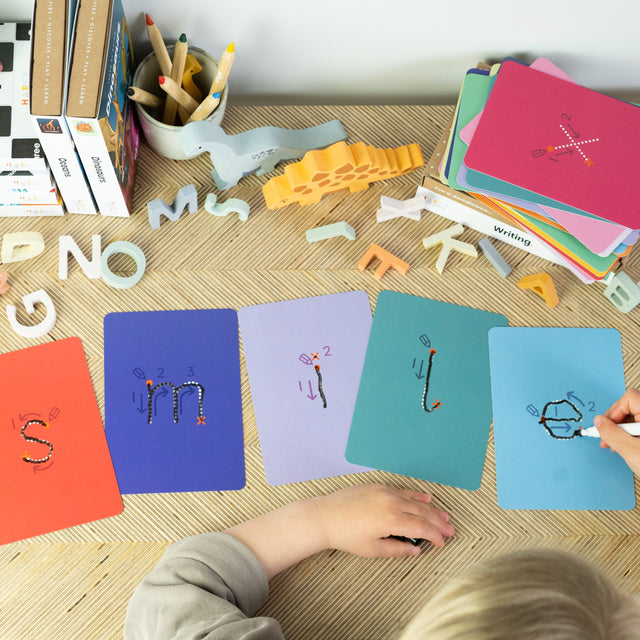
Where a letter starts matters more than how neat it looks. Follow the arrows together.
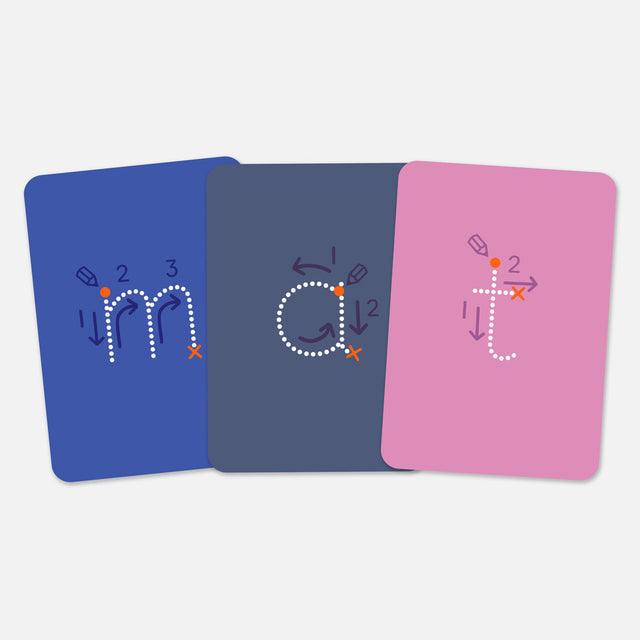
"Round, up and down" for a. Saying the movement out loud helps it stick.
Five minutes is plenty, and it doesn't all have to be on paper. Stop before their hand gets tired, so they're keen to come back to it tomorrow.


Lots of writing practice happens before a pencil is involved, and it's often the part children enjoy most.
There are more ideas in our guide to mark making activities.
Workbooks
Handy for pencil practice, though once a page is done, it's done.
Apps
Tracing with a finger on a screen can help with letter shapes.
Flashcards
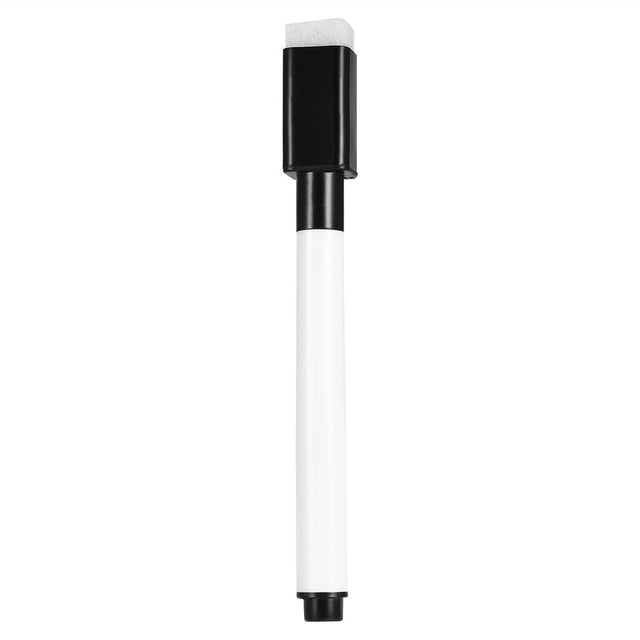
Trace with a dry-wipe pen, follow the arrows, wipe clean and go again!
THE BENEFITS
Forming letters the right way early makes writing easier later.

Starting in the right place keeps letters the right size and shape.
Letters formed the right way join up more easily in Year 2.
A comfortable grip and smooth movements mean they can write for longer.
Writing their own name is a big moment!
Most lowercase letters start at the top. Schools often teach them in families that share the same first movement, so learning one letter helps with the next.
That leaves e, which starts in the middle, and s and f, which start at the top and curve.
Mixing up b and d, or writing a letter back to front, is very common in young children and usually sorts itself out with time. Starting each letter in the right place is what helps most.
Our free letter formation chart shows where every letter starts, ready to print.
Before you buy
Look for cards that show where each letter starts, can be used again and again, and begin with shapes.
A start dot and arrows show where the pen goes, so your child learns the right movement from the start.
Wipe-clean cards can be traced as many times as it takes, which a workbook page can't.
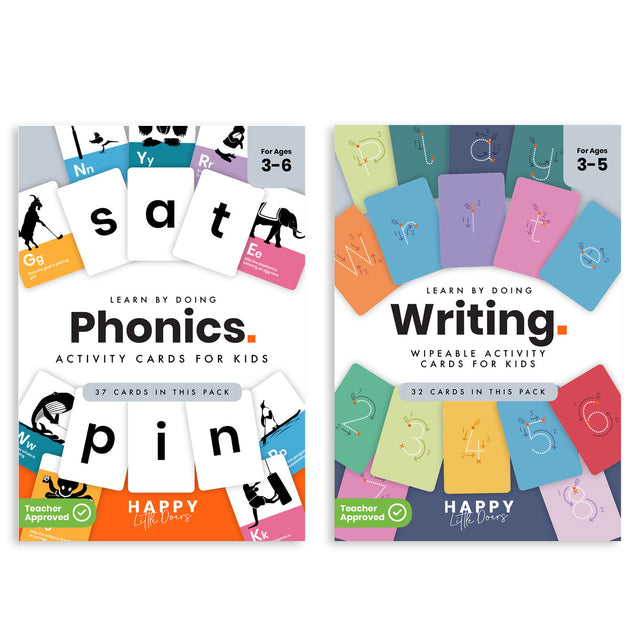
Lines, circles and crosses build the control letters need. Our Shapes pack starts there, before the Writing pack moves on to letters and numbers.
Writing cards get traced, wiped and traced again. So we print ours on thick card, cut them to A6 with rounded corners, and finish them with gloss laminate. Good cards can be passed down to a younger brother or sister, so you get your money's worth!

For small hands, thicker is usually easier.
For our wipe-clean cards, we make a fine-tip drywipe pen, sized for little hands.