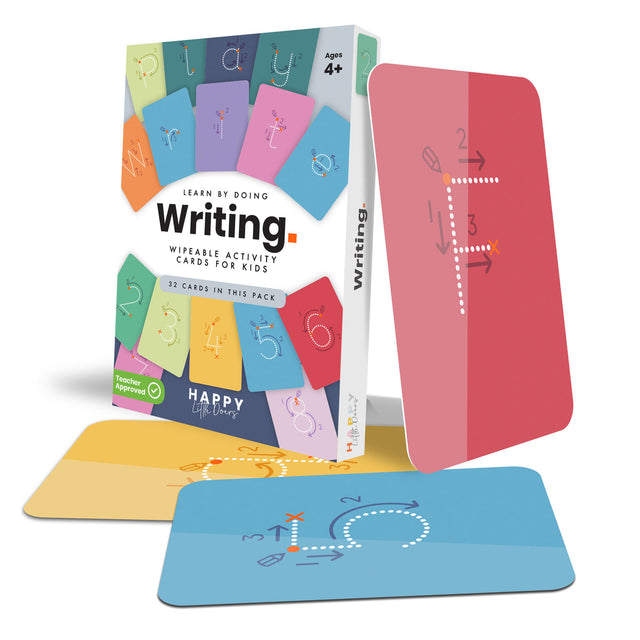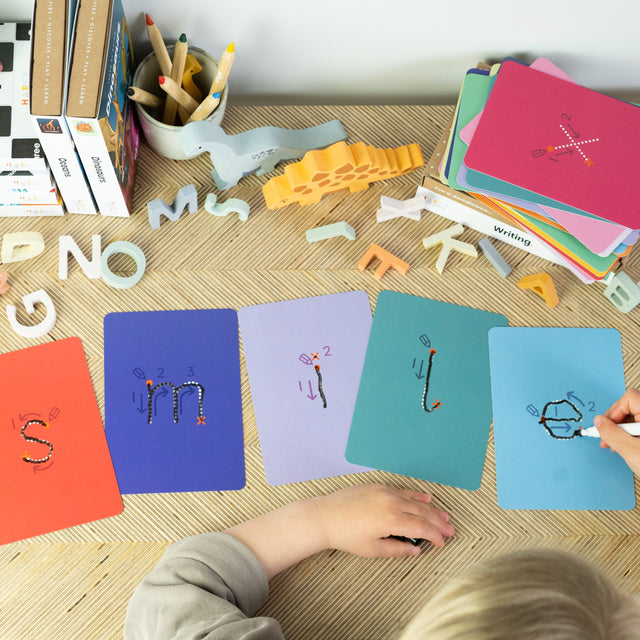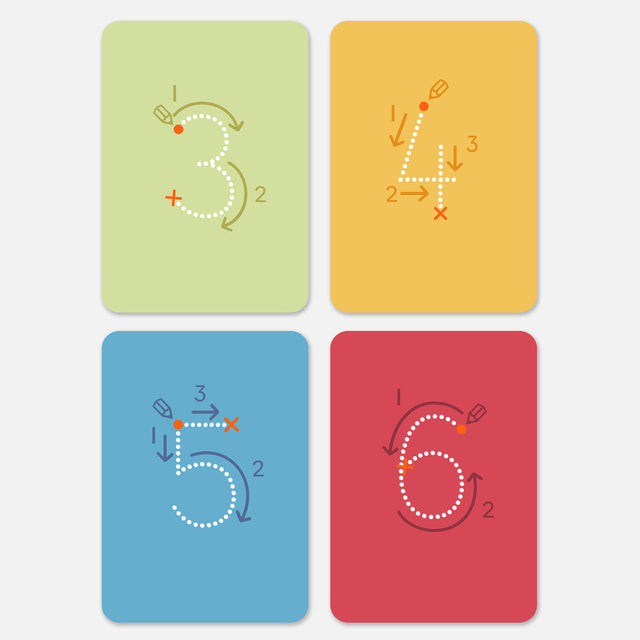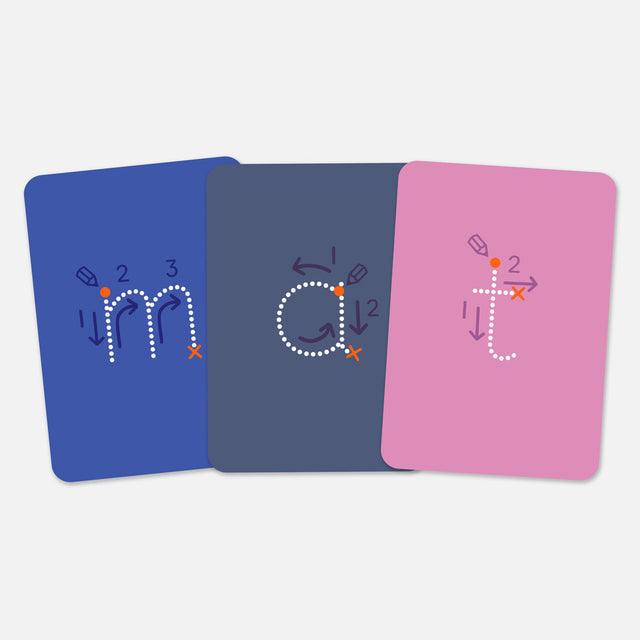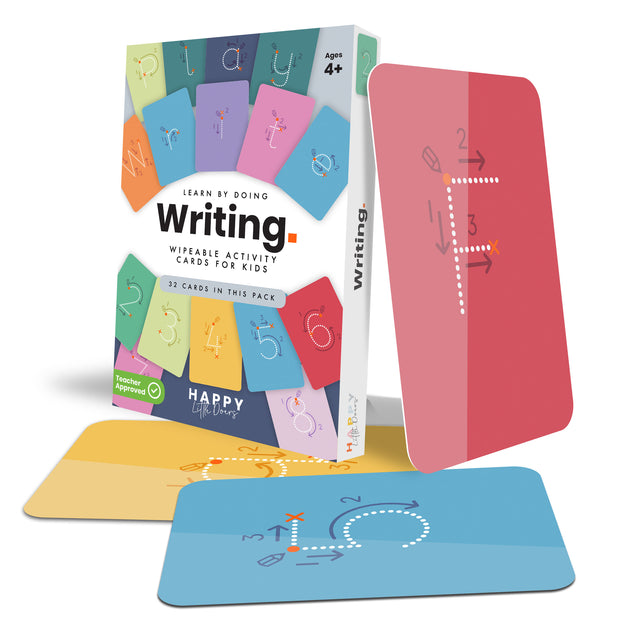


Writing Flashcards
£19.95
FREE SHIPPING ON ORDERS OVER £50

Start typing to see kits, or press Enter to see every match.
Loading…
Free printable · Writing
The short answer
Good letter formation means starting each letter in the right place and moving the pencil the right way. Letters are easiest to learn in families that move the same way, like the long ladder letters l, i and t.
Our free chart shows every letter with a start dot, numbered arrows and a finish cross, taken from our Writing Flashcards.

Lowercase letters in four families, and capitals A to Z, with start dots and arrows.
Download free PDFGoes with our Writing Flashcards
How to form letters
Grouping letters by how they're formed means each new letter builds on one your child already knows.
Start at the top and go straight down. Most children find these the easiest place to begin.
Down the ladder, back up, and over. Say it out loud as they write: "down, up and over".
Start at the top and curl back round, like a c. Once c feels easy, a, d and o are just a c with one more stroke.
Straight lines that go down and up. These often come last.
Most children start forming letters in Reception, once they can hold a pencil comfortably.
In Year 1, children learn to start and finish each lowercase letter in the right place, to form capitals and the digits 0 to 9, and to practise letters in their families. Before that, plenty of mark making and big movements help: drawing circles, lines and zigzags in the air, in sand or with chalk. Our guide to learning to write covers every step, from pencil grip to letter formation.
At home
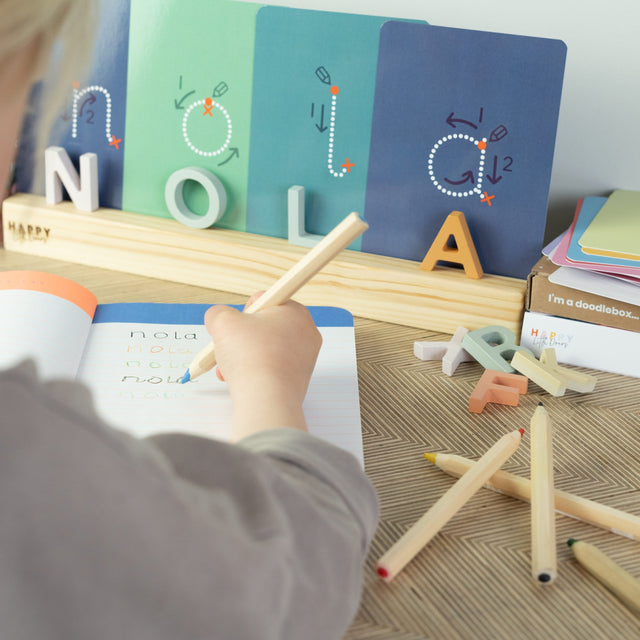
Short, playful practice works best.
Trace the letter on the chart with a finger before picking up a pencil.
"Start at the top, down, back up and over." The words help the movement stick.
Draw the letter huge in the air or in sand, then on paper.
Look at where they start, not just the finished letter. The start dot is the bit that matters.
Our cards
Wipe-clean cards with a pen, so they can practise again and again.
Questions
Letter formation is how a letter is written: where the pencil starts, which way it moves, and where it stops. Getting it right early makes joined handwriting easier later.
Long ladder letters (l, i, t, u, j, y), one-armed robot letters (r, b, n, h, m, k, p), curly caterpillar letters (c, a, d, o, s, g, q, e, f) and zigzag letters (z, v, w, x).
Many children start with the letters in their own name, and the long ladder letters. Follow what interests them.
Yes. Page 1 is the lowercase letters in their families, and page 2 is capital letters A to Z.
Yes. It's free to print at home or in the classroom. There are more in our free printables library.
UK delivery is free on orders over £50.