
Parent guide · Early writing
Mark making activities for toddlers and preschoolers
The short answer
Mark making is any time a child makes a line, dot or shape on purpose: in sand, paint, chalk or with a pen.
It builds the hand control and confidence that writing needs later, and it's one of the first steps towards forming letters.

The basics
What is mark making?
Mark making is the scribbles, lines and shapes children make before they can write. Every mark counts.
Why it comes before writing
Writing needs strong fingers, a steady hand and control of a line. Big, messy marks build those first, then smaller, more careful ones.
What it looks like by age
Toddlers make big sweeping marks with their whole arm. By 3 or 4, many children draw circles and lines on purpose, and start to copy simple shapes.
Watch
Mark making with wipe-clean cards
Lines and shapes come first, then letters.
Activities
8 mark making activities to try at home
Each one uses things you probably already have.
1. Mark making in sand
Fill a tray with sand and trace a shape or letter with a finger. Shake it smooth and go again. Idea from @oak.and.ever: sand tray mark making.
2. Gel bag writing
Seal hair or hand gel and a little paint in a zip-lock bag, lay a card underneath and trace over the top. Idea from @wonder.learn.play: gel bag writing.
3. Painting with water
Give them a pot of water and a big brush, and let them paint a fence, wall or patio. The marks disappear as they dry.
4. Chalk on the ground
Big chalk lines, circles and zigzags on a path. Then try following each other's lines.
5. Finger painting
Dots, swirls and lines with one finger, on a big sheet of paper.
6. Rice or salt tray
Like the sand tray, with a thin layer of rice or salt on a baking tray.
7. Trace shapes on wipe-clean cards
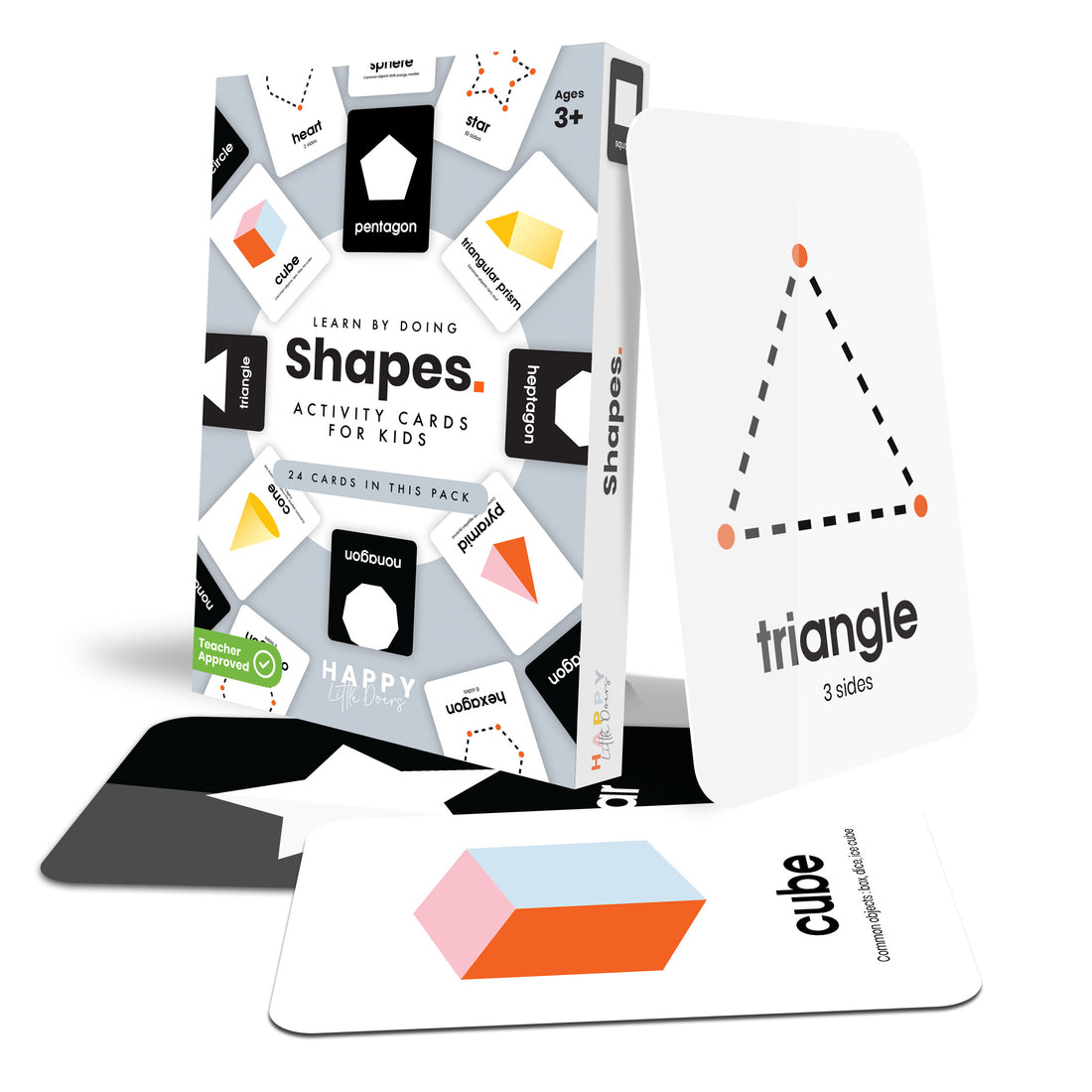
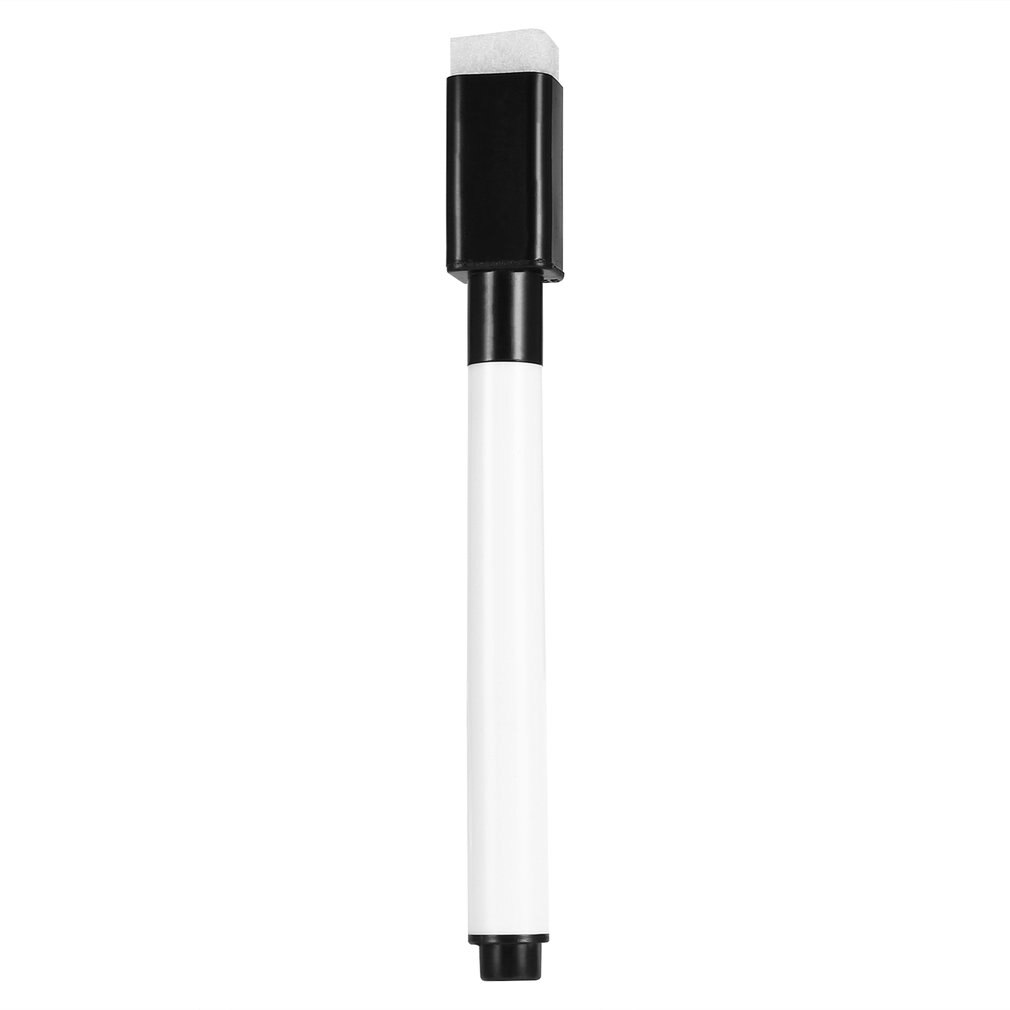
Shapes Flashcards have lines and shapes to trace with a dry wipe pen. Wipe and try again.
8. Trace letters on wipe-clean cards
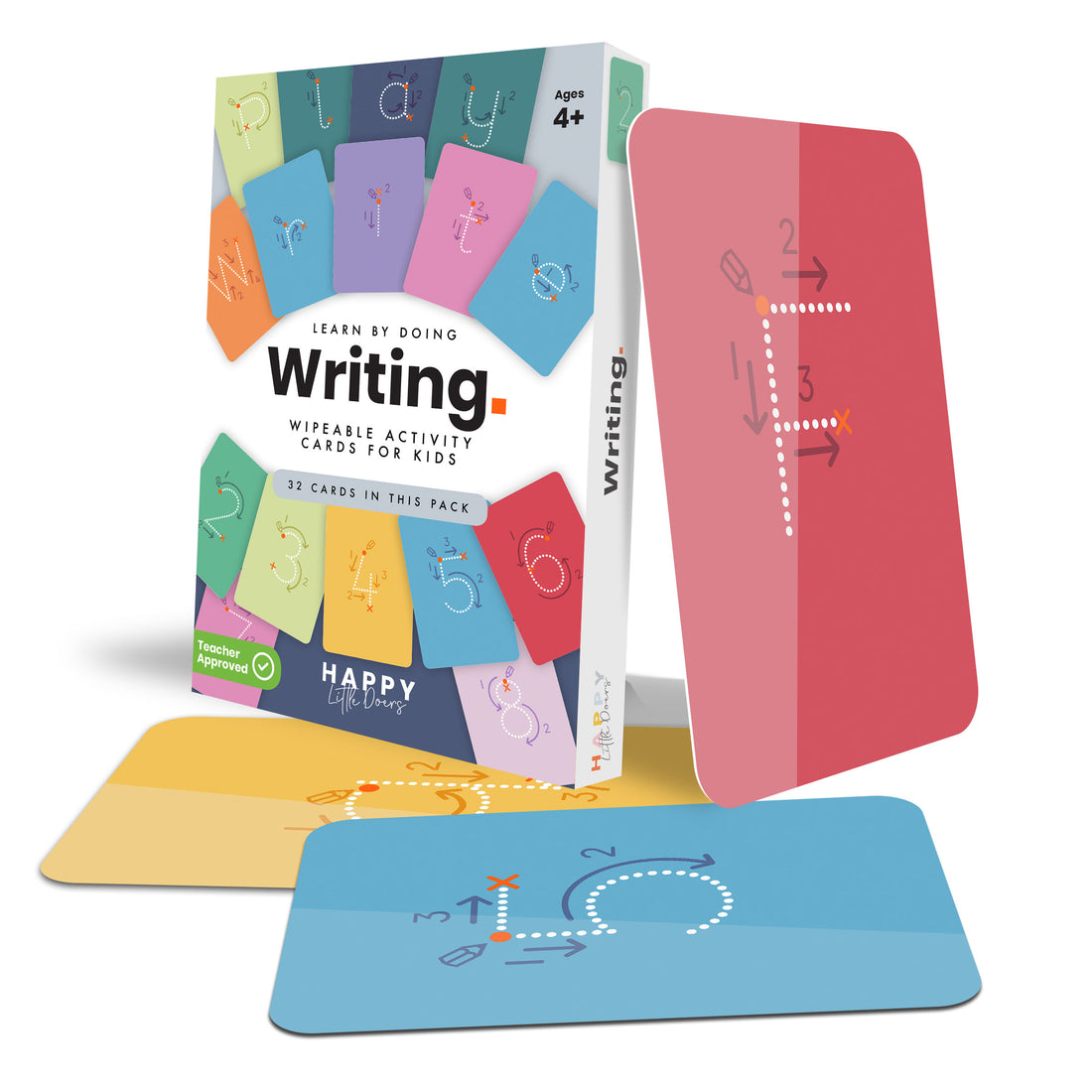
Once lines and circles are easy, Writing Flashcards show where each letter starts and which way it goes.
Next steps
From mark making to writing letters
Once children can draw lines and circles on purpose, they're ready to start forming letters.
Most letters are made from the same few movements, so letters are easiest to learn in families. Our free letter formation chart shows every letter with a start dot and arrows, and our guide to teaching your child to write covers the whole journey from pencil grip to letters.
Our cards
Cards and pens for mark making
Wipe-clean cards to trace, wipe and try again.
Questions
Mark making: your questions
What is mark making in the early years?
The lines, dots and shapes young children make before they can write. It builds the hand control writing needs.
What age does mark making start?
As soon as a child can hold a crayon or poke a finger in sand. Big arm movements come first, then smaller, careful marks.
Why is sand good for mark making?
It gives instant feedback, it is easy to wipe and start again, and using a finger builds control without a pencil grip.
When should children start writing letters?
When lines and circles feel easy. For many children that is around Reception, but every child moves at their own pace.
How much is delivery?
UK delivery is free on orders over £50.