
Parent guide · Starting school
What will my child learn in Reception? A parent's guide
The short answer
Reception is the first year of primary school in the UK, for children aged 4 to 5. Most of the day is learning through play, with a short phonics and maths session most days.
By the summer, most children can read simple sentences, write a few words and know numbers to 10 really well. At home, five minutes of play a day goes a long way.

Start here
What does Reception actually cover?
Reception follows the Early Years Foundation Stage, the same framework as nursery. It covers seven areas, from talking and making friends to maths and art, and most of it is taught through play.
The parts parents ask about most are reading, numbers and writing. Turn the cards over to see how each one starts.
Tap a card to turn it over.
A closer look Hover over a card, or tap it, to turn it over.
- Reading. Phonics most days. Letter sounds first, then blending them into words like sat and pin.
- Numbers. Counting beyond 20, and really knowing the numbers to 10: what makes 5, which is more, and how to share them out.
- Writing. Holding a pencil, forming letters the right way, and writing their name, then short words and sentences.
What do children actually do all day in Reception?
Every school does things a little differently, but a typical day might look like this.
- Arriving. Hanging up their coat, finding their name and choosing a quiet activity while everyone arrives.
- Carpet time. The register, the day and the weather, and what's happening today.
- Phonics. A short, lively session on letter sounds.
- Choosing time. Children pick from activities set up indoors and outside, and the adults join in.
- Lunch. Often in the big hall with the rest of the school, which can feel huge at first.
- Maths. A short group session on counting and numbers, then more play.
- Story time. A story on the carpet to finish, then home.
What happens across the Reception year?
Every school plans its own year, but most follow a similar shape.
Autumn term: Settling in. New routines, new friends and the first letter sounds, often s, a, t, p, i and n. In the first six weeks, the teacher does a short one-to-one check called the Reception Baseline Assessment. There's nothing to prepare for, and no pass or fail.
Spring term: Blending sounds to read simple words, and the first tricky words like the and I. Lots of work on the numbers to 10, and writing their name.
Summer term: Reading short sentences, writing simple phrases, and number bonds to 5, like 3 and 2 make 5. At the end of the year, the teacher records how your child is getting on and shares it in their report.
Our son has never been very interested in his numbers… He is now obsessed! This morning he even chose to play ‘Speedy Numbers’ before breakfast instead of watching his tv show, a real first!

Starting school
Is my child ready for Reception?
If you're wondering, you're not alone. When teachers talk about being ready, they mostly mean the practical things, rather than reading or writing.
- Using the toilet on their own, and washing their hands after.
- Putting on their coat and shoes, even if it takes a while.
- Recognising their own name, on a peg, a drawer or a water bottle.
- Sitting for a short story and listening along.
- Asking for help, like "I need the toilet" or "I'm hungry".
Every child starts in a different place, and teachers are used to that. A little practice at home, like doing up their own coat before you go out, makes a real difference.
What should my child know before starting Reception?
Nothing on this list is required. Teachers start from wherever your child is, but a few things can help them feel at home in the classroom.
- Enjoying stories and talking about the pictures.
- Hearing sounds in words, like which words rhyme with cat.
- Counting a few things, like toys as you tidy up.
- Holding a crayon and making marks, even if it's mostly scribbles.
- Taking turns in a simple game.

Learning through play
How to help your child in Reception at home
You don't need to teach them to read before they start. Little bits of play, most days, help more than you'd think.
Teach the sounds rather than the letter names, so s is sss. That's how school teaches it. Count the things you're already touching, like stairs, socks and grapes on the plate.
And keep their fingers busy. Playdough, stickers and threading beads all build the pinch grip they'll need for a pencil.
Reception skills to practise at home
Three ways to play (and learn) the Reception basics.
There are lots of fun ways to play and learn at reception-level. See all our games and activities
Three habits that help
The best way to prepare for Reception is a little play every day, using the same sounds and counting school will use.
-
Sounds, not letter names
Play I spy with sounds: "something beginning with mmm". You can do it anywhere.
-
Count what you touch
"You've got five strawberries. If you eat one, how many are left?"
-
Busy fingers
Peeling stickers, squishing playdough, picking up raisins with tweezers. If their fingers are busy, it's working.
How much should you do at home?
A few minutes most days is plenty. Once school starts they'll be tired at the end of the day, so keep it light: a story at bedtime, or counting on the walk home.


THE BENEFITS
Why the first year of school matters
A lot of Reception happens away from the books.

Saying what they think
Listening in a group, asking questions and following a short instruction.
Getting on with others
Taking turns, sharing and saying how they feel.
Busy hands and bodies
Running, climbing, cutting, threading and holding a pencil.
Curious about everything
People, places, nature, music and making things.
Reception flashcards
The best flashcards for starting Reception

Preschool (0–4): Just Starting Out
At this age, play does the teaching. First sounds, numbers and shapes — and dinosaurs!
Browse 20 products
Reception (4–5): Starting School
Everything for the year they start school — phonics, tricky words, first writing and numbers.
Browse 17 products
Primary School (5–8): Up and Running
Tricky words through Year 4, times tables, and writing that gets neater with every wipe.
Browse 20 productsReading
Help young learners on their way to becoming fluent readers. Phonics for sounding out, tricky words for the ones that...
Browse 8 products
Numbers & Maths
Counting, number recognition, shapes and first sums. Numbers make more sense when children can pick them up, line them up...
Browse 7 products
Times Tables
Tables click through repetition. Use the wipe-clean cards to write the answers, wipe them and try again. Use the wall...
Browse 7 products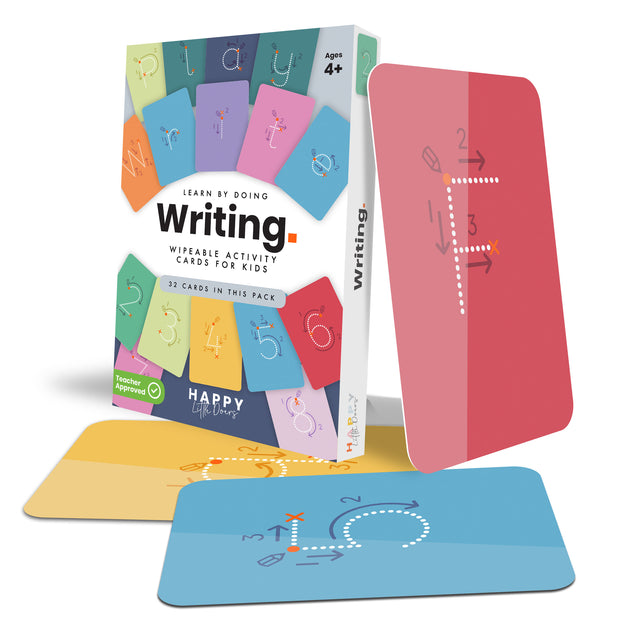
Writing
Letters, numbers and shapes, formed the correct way. Our cards are wipe-clean: trace the arrows, wipe it clean, try it...
Browse 6 products