
Parent guide · Flashcards
How to use flashcards effectively (and choose the best ones for your child)
The short answer
Flashcards work when they feel like a game. A good set is made for the stage your child is at, with one clear idea on every card.
Keep it short, come back to them often, and stop while your child still wants more.

See it at home
Flashcard games to play at home
The great thing about flashcards is the variety of games you can play. There's something for everyone. Here are three games from three different packs.
There are lots of fun ways to play with flashcards. See all our games and activities
Choosing the best flashcards
What are flashcards?
A flashcard is a small card with one thing to learn on it. That might be a letter sound, a number, a word or a picture to name.
Most cards have something on both sides. One side asks the question, like a big letter or the number 6. The other side helps with the answer, like an animal that starts with that sound, or six dots to count.
You'll come across three kinds:
- Picture cards for babies and toddlers, to look at and name.
- Question cards for school skills: say the sound, count the dots, read the word.
- Activity cards to do something with: trace a letter, match a pair, try a yoga pose.
They work best as a quick game you play together, a few minutes at a time. Every Happy Little Doers pack comes with game ideas, so you always have something new to try.
What makes a good flashcard?
A good flashcard asks one question. The below examples are taken from our Phonics, Numbers and Writing packs. Turn the cards over to see both sides.
Tap a card to turn it over.
A closer look Hover over a card, or tap it, to turn it over.
- One idea per card. A sound, a number or a word.
- Big and clear. Bold print and simple pictures.
- Something to do. Cards that ask a question: say, count, match or trace.
What to look for in the best flashcards
Look for cards made for your child's stage, with something to do on every card, that will stand up to daily use.
Made for their stage
A set should match what your child is learning now, whether that's first words, letter sounds or times tables. Cards that follow the order schools teach in make it easy to pick up where the classroom left off.
Something to do on every card
The best cards ask your child to say, count, trace or match something. Game ideas in the box mean you won't run out of ways to play.
Tough enough for real life
Cards get dropped, sat on, carried round in pockets and handled with sticky fingers. So we print ours on thick card, cut them to A6 with rounded corners, and finish them with gloss laminate. Good cards can be passed down to a younger brother or sister, so you get your money's worth!


LEARNING THROUGH PLAY
How to use flashcards effectively
You know the wriggle. You sit down with the best intentions, and they'd rather do anything else! It's perfectly normal.
The best advice is simply to let the learning hide inside the play. When children are just having fun, the counting, the letters and the sounds come along for the ride.
Attention spans are short, so five minutes at the kitchen table is plenty!
Five flashcard games that work
Each game takes a few minutes and uses cards you already have. Start with the one that fits your child's age.
-
1 minute
Game 1
Follow the card
Hold a black-and-white card in front of your baby and wait for them to find it. Then move it slowly to one side and see if their eyes follow.
What to say: "Look at this! Where's it gone now?"
-
2 minutes
Game 2
Point and name
Spread out a few animal cards. Make an animal noise and let your child find the animal that goes with it. Then swap, and let them make the noise for you.
What to say: "Who says moo? Can you find them?"
-
2 minutes
Game 3
Copy the sound
Show a phonics card, say the sound clearly and let your child copy you. Keep it short and pure, so "sss" rather than "suh".
What to say: "Can you make this sound with me? What else starts with it?"
-
3 minutes
Game 4
Number thief
Lay out cards 1 to 10 in order. Your child closes their eyes while a teddy "steals" a card. Can they spot which number has gone?
What to say: "Oh no, the number thief has been! Which one is missing?"
-
3 minutes
Game 5
Skip counting race
Choose one times table and say it together in order, like counting in fives. Then mix up the cards and see which answers they know straight away.
What to say: "Let's count in fives. Ready? Five, ten..."
Three habits that help
There's no single right way, but these three habits help at every age, from first picture cards to times tables.
-
Make it a game
Children learn by doing. Turn the cards into a game and the practice takes care of itself.
-
Mostly easy, a little new
Keep most of the cards to ones your child knows, with a couple of new ones mixed in. Getting answers right is what keeps them keen.
-
Let them lead
Let your child pick the cards and the game. Children who feel in charge stay in for longer.
How often should you use flashcards?
A few minutes, most days, is plenty. Short sessions fit around real life, and stopping while your child still wants more means they'll ask for the cards again. Little routines done often become the habits that last a lifetime.


Cards, apps or printables?
Most parents we hear from have tried all three. Each has its place, and plenty of families use a mix.
Learning apps
Brilliant in the car
The device takes the lead, which you might want on a long drive or in a waiting room.
Free printables
Worth a go first
Printing a sheet is a cheap way to start with home learning. But it takes some prep, and A4 paper may not inspire, or last!
Flashcards
Made for every day
For playing together. Cards should be durable, with multiple activities to play and learn.
THE BENEFITS
What are flashcards good for?
A few minutes, most days, builds the skills children carry right through school.

Confident talkers
New words, spoken out loud.
Fluent readers & counters
From letter sounds to whole sentences.
Remembers what they learn
Little and often makes it stick.
Sure of themselves
Small wins, every single day.
Age and stage
What age are flashcards for?
There's a card from every age from newborn to the end of primary school. What changes is what your child is learning. The cards change with them.
Babies: Bold black-and-white cards give newborns something to focus on, and you something to talk about.
Pre-school: Shapes, colours, counting and first letter sounds, as they get ready for school.
Reception and Year 1: Letter sounds, blending and the first tricky words, alongside forming letters properly.
Year 2: Common exception words, number bonds and spelling patterns.
Years 3 and 4: Times tables, ready for the Year 4 multiplication check, and harder spellings.
Every child moves at their own pace, so go by what yours is learning now rather than the number on the birthday cake.
The resources are such high quality and although initially intended for my 3-year-old son, my 6-year-old daughter loved them too.

Which flashcards are best for my child's age?
Start with the stage your child is at now, then pick the skill they're working on.

Preschool (0–4): Just Starting Out
At this age, play does the teaching. First sounds, numbers and shapes — and dinosaurs!
Browse 20 products
Reception (4–5): Starting School
Everything for the year they start school — phonics, tricky words, first writing and numbers.
Browse 17 products
Primary School (5–8): Up and Running
Tricky words through Year 4, times tables, and writing that gets neater with every wipe.
Browse 20 productsReading
Help young learners on their way to becoming fluent readers. Phonics for sounding out, tricky words for the ones that...
Browse 8 products
Numbers & Maths
Counting, number recognition, shapes and first sums. Numbers make more sense when children can pick them up, line them up...
Browse 7 products
Times Tables
Tables click through repetition. Use the wipe-clean cards to write the answers, wipe them and try again. Use the wall...
Browse 7 products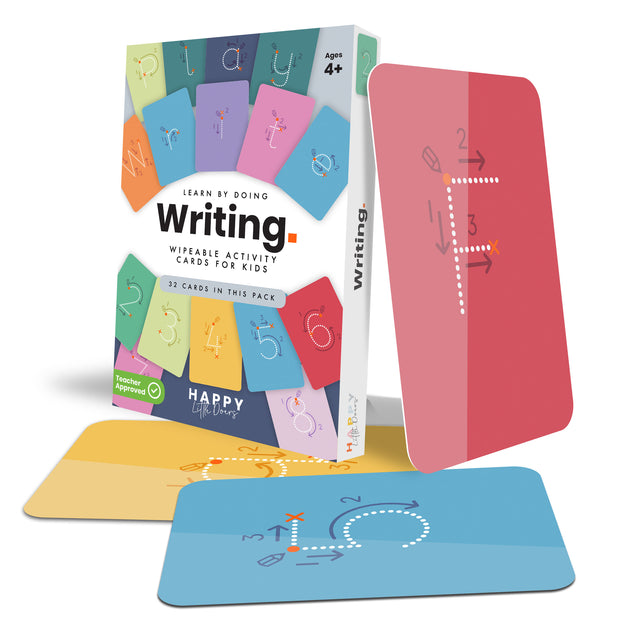
Writing
Letters, numbers and shapes, formed the correct way. Our cards are wipe-clean: trace the arrows, wipe it clean, try it...
Browse 6 products
Dinosaurs
The dinosaur obsession, turned into real learning. Flashcards, a snap game and a wall print that put all that dinosaur...
Browse 4 products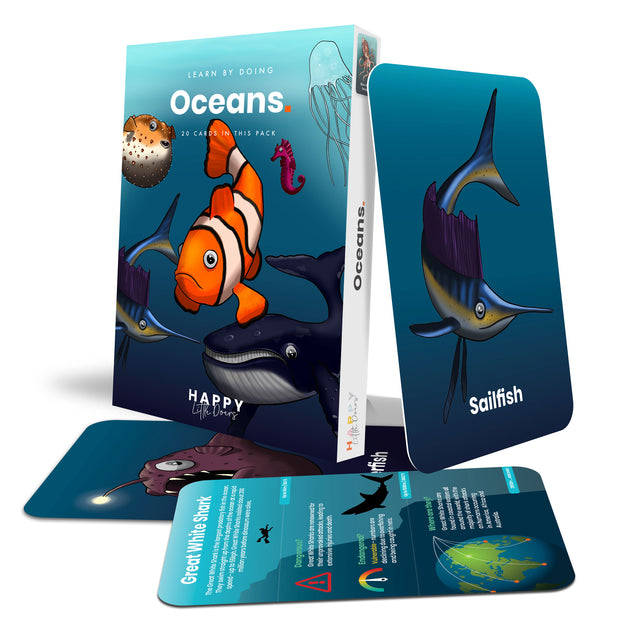
Oceans
Rock pools, deep water and everything in between. Ocean packs that turn curiosity about what lives down there into new...
Browse 3 products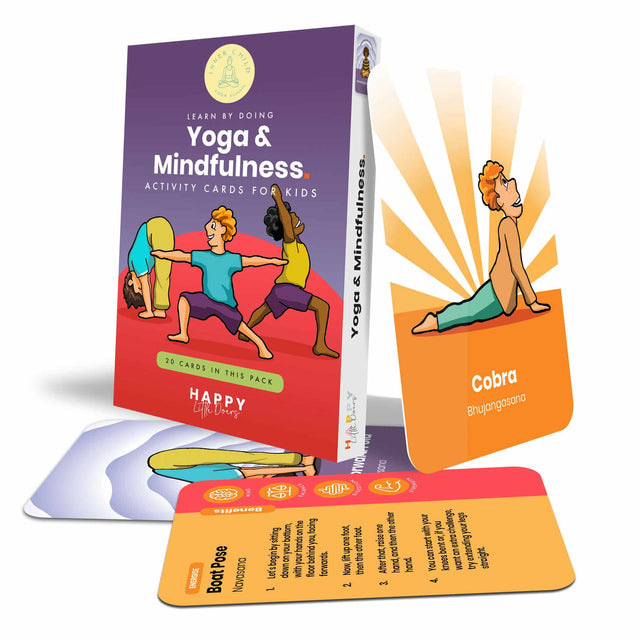
Yoga & Mindfulness
Stretch, breathe, wobble, laugh. Simple poses and calm-down moments a child can lead themselves — handy before bed, or after...
Browse 3 products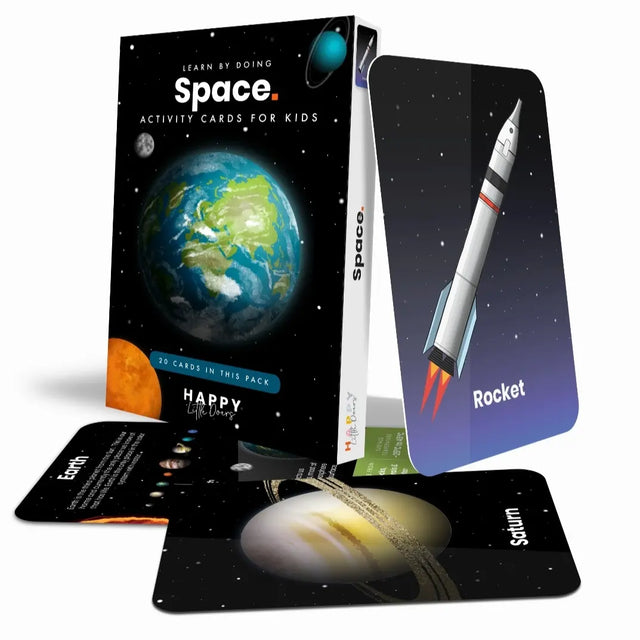
Space
Launch little minds into space. Planets, rockets and a great many questions — on cards made for little hands and...
Browse 3 productsAre flashcards good for toddlers and babies?
Yes, when they're something to look at and talk about together. Babies and toddlers learn most from you: your face, your voice and the games you play.
Babies
Newborns can follow a face in the centre of their view, and by 6 to 8 weeks most will turn their head to follow a moving object, according to the NHS Healthier Together guide to vision. Bold black-and-white cards are easy for young babies to pick out. Hold one close, let them look, and talk about what they can see.
The same NHS guide suggests showing your baby pictures of faces and colourful books, pointing out new things and playing peek-a-boo. A card fits in nicely alongside all of these.
Toddlers
Between one and three, children pick up new words fast. Picture cards give you plenty to chat about: animal noises, colours, "where's the cow?". The Department for Education's Hungry Little Minds campaign puts it in three words: chat, play, read.
At this age the card is a prompt for a conversation. Asking a toddler to recite letters or numbers off a card can turn play into a test, and the fun goes out of it.
When to leave the cards for another day
If your baby looks away, fusses or gets sleepy, they've had enough for now. A toddler who wanders off is telling you the same thing. Stop there and come back another time. A minute of looking together is plenty.
Keep going when
- They're looking at the card
- They're smiling, babbling or reaching
- They ask for another one
Stop for today when
- They look away or turn their head
- They're tired, hungry or grumpy
- It starts to feel like a test