
Parent guide · Babies
Baby development activities at home, 0 to 12 months
The short answer
The best way to support your baby's development is everyday time together: faces, talking, play and tummy time.
Simple things like high-contrast cards give them something interesting to look at, but every baby moves at their own pace.

The basics
How to stimulate baby brain development
Babies learn through their senses and through you. Ordinary moments do most of the work.
Talk, sing and respond
Talk about what you're doing, sing, and answer their coos and babbles as if it's a conversation.
Faces first
Your face is the most interesting thing your baby can look at. Hold them close and give them time to look.
Things to look at
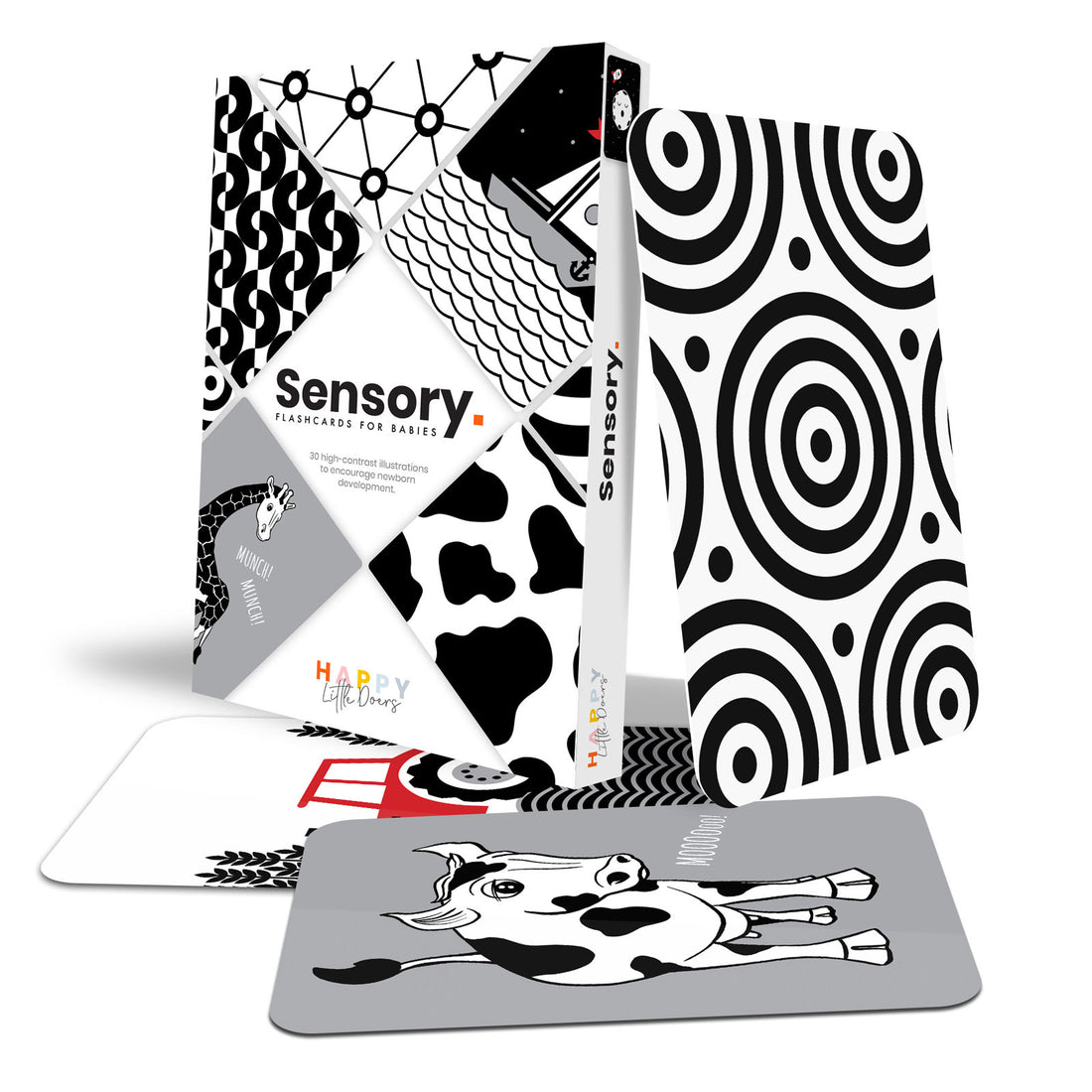
Bold, simple patterns are easy for young eyes to pick out, so they give your baby plenty of practice at looking. There's no good evidence that any card or toy makes a baby cleverer, so think of them as something to enjoy together.
Watch
Baby stimulation cards in action
A minute or two at a time, close up, while your baby is enjoying it.
0 to 12 months
Baby development activities month by month
A rough guide only. Go by what holds your baby's attention rather than their age in weeks.
0 to 3 months
Hold bold patterns and your face close, about 20 to 30 cm away. Short spells of tummy time, with something to look at in front of them. According to the NHS, by 6 to 8 weeks most babies will turn their head to follow a moving object.
3 to 6 months
Move a card slowly side to side for them to follow, and offer things to reach for. Name what they're looking at.
6 to 9 months
Play peekaboo, roll a ball between you, and point at pictures and name them, noises and all.
9 to 12 months
Picture cards and simple board books, pointing and naming together. Many babies start to wave, clap and copy sounds.
Cards
Where black and white cards fit
High-contrast cards are a simple, low-effort way to give a young baby something to focus on, especially in the first months.
Our guide to black and white cards for babies explains when and how to use them.
Our cards
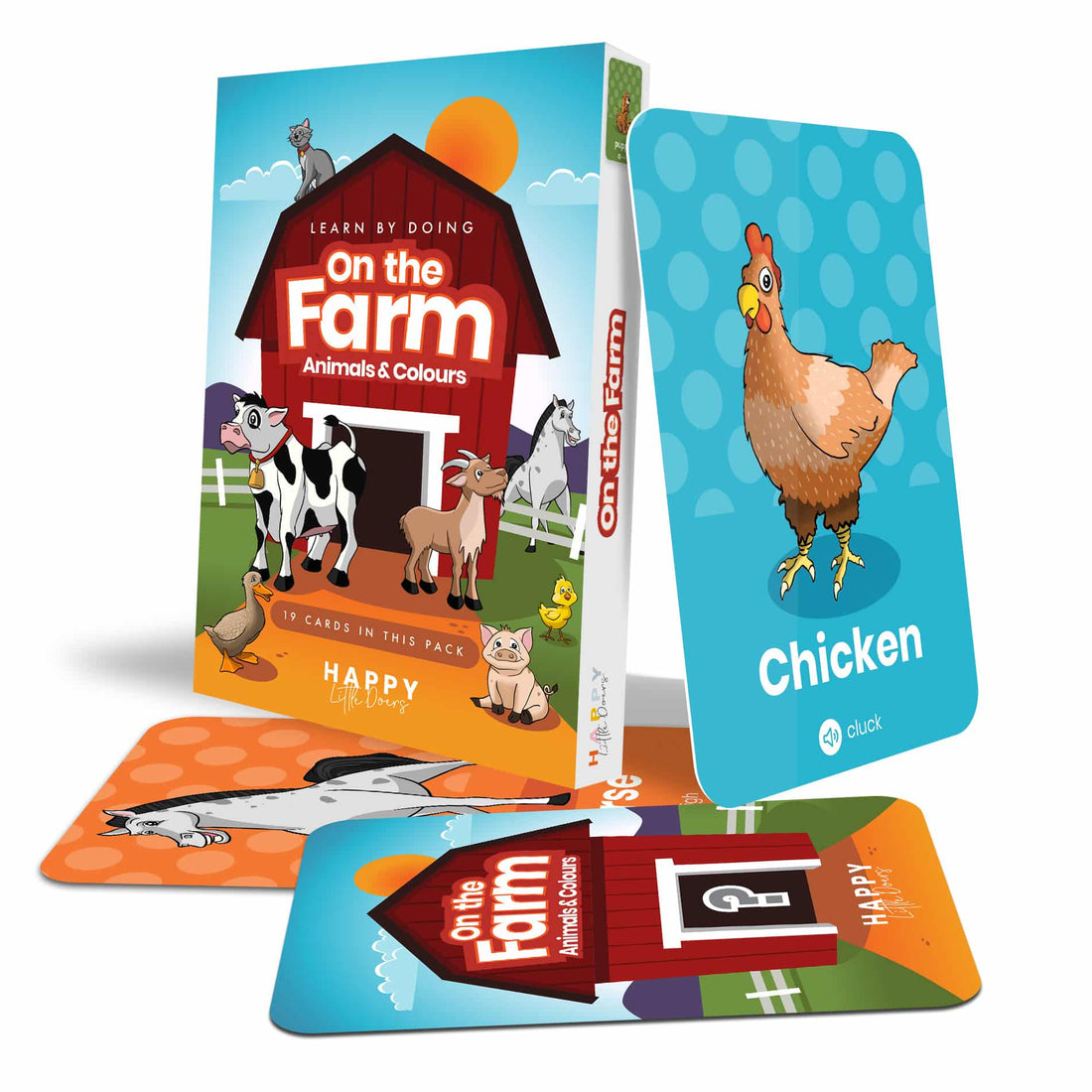
Cards for the first year
From high contrast for newborns to animals and colours later on.
Questions
Baby development: your questions
How can I stimulate my baby's brain development?
Talk, sing, play and give them time to look at your face and simple, bold patterns. Everyday moments together are what matter most.
What are baby stimulation cards?
Cards with bold, high-contrast patterns, made for young babies to look at. They are also called sensory or black and white cards.
Do black and white cards speed up development?
There is no good evidence that they do. They give your baby plenty of practice at looking, which is how their eyesight develops.
What if I am worried about my baby's development?
Talk to your health visitor or GP. Every baby develops at their own pace, and they can help if anything worries you.
How much is delivery?
UK delivery is free on orders over £50.